Connection Before Correction
A calm relationship helps a child become available for listening, learning, problem-solving, and repair.
Everyday feelings can become lifelong skills.
Emotional growth begins when children feel safe enough to notice what is happening inside, supported enough to express it, and capable enough to choose what to do next. This guide turns those big ideas into calm, practical family habits that can fit into playtime, reading time, meals, transitions, and ordinary moments at home.
The goal is not to prevent every difficult feeling. The goal is to help children move through feelings with connection, language, boundaries, and gradually increasing independence.
A calm relationship helps a child become available for listening, learning, problem-solving, and repair.
Precise but age-appropriate words help children organize experiences that might otherwise feel confusing or overwhelming.
Emotional confidence is built through many ordinary practice moments, not one perfect conversation.
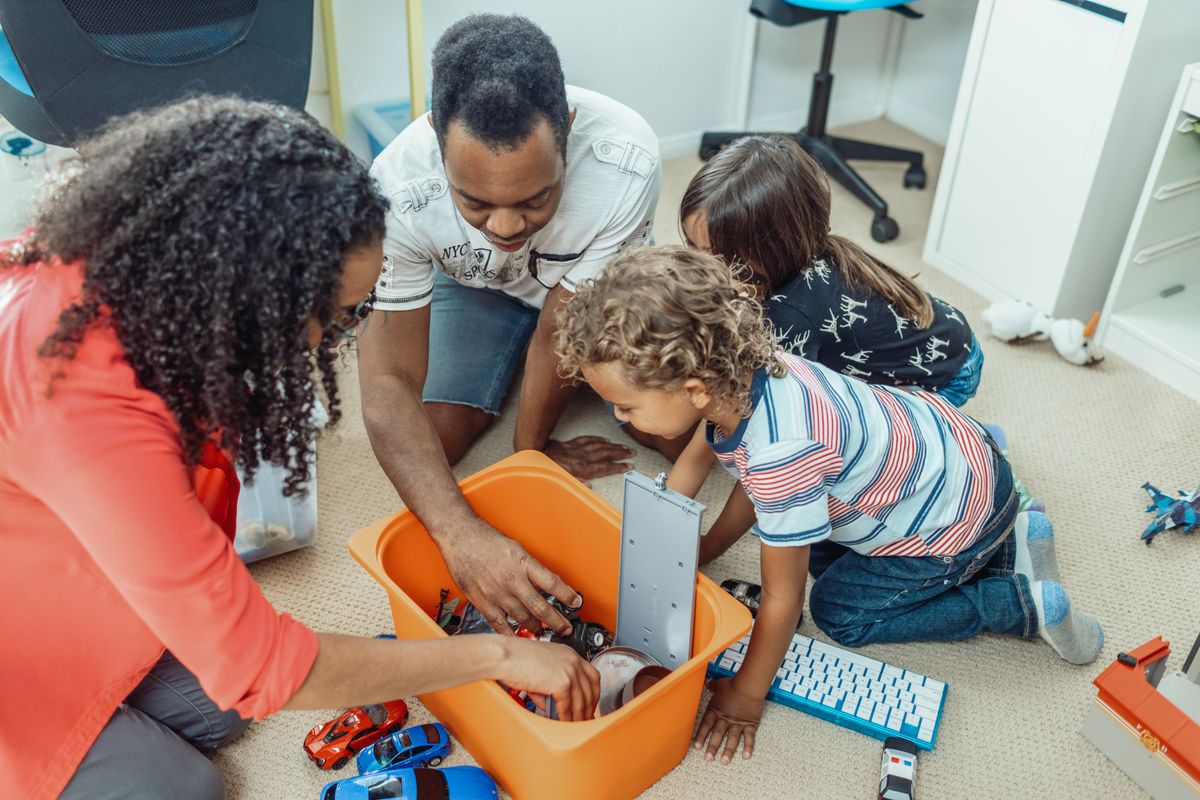
Children often communicate emotional needs through behavior before they have the words to explain them. A dependable response sequence can help parents remain grounded while teaching children what to do with the feeling, not simply how to stop showing it.
Describe what you can see: a tight face, fast movements, quiet withdrawal, tears, or a raised voice. Focus on the moment rather than defining the child as difficult, dramatic, shy, or angry.
Try gentle language such as, “You might be disappointed,” or, “I wonder if that felt unfair.” This invites reflection without demanding that the child immediately explain everything.
A feeling can be accepted while a limit remains clear: “It is okay to be angry. I will not let you hit.” Warmth and structure work together rather than against each other.
Choose a realistic action: ask for help, take space, squeeze a pillow, draw the feeling, try again, repair a mistake, or use a short sentence to express a need.
Emotional development is interconnected. Children first notice internal signals, then learn language, regulation, perspective, and eventually more independent problem-solving.
Help children recognize that feelings have names, body clues, and changing intensity. Awareness creates a pause between the experience and the response.
Try: “Where do you notice that feeling in your body?”Move beyond only happy, sad, and mad. Introduce words such as worried, disappointed, proud, lonely, frustrated, excited, calm, embarrassed, hopeful, and relieved.
Try: “Is it more frustrated, worried, or disappointed?”Practice calming strategies while the child is already calm. Familiar actions are easier to use later when emotions become more intense.
Try: “Let us slow our bodies before we decide.”Storytelling and play help children consider that another person may have a different feeling, need, intention, or point of view.
Try: “What might the other person be feeling?”Teach that mistakes can be acknowledged and repaired. Resilience grows when children experience a setback, receive support, and participate in a constructive next step.
Try: “What could help make this a little better?”When emotions are high, long explanations can feel like more pressure. Begin with one grounded sentence, protect the boundary, and wait until the child is more settled before teaching, questioning, or problem-solving.
“You were expecting something different. It is hard when a plan changes.”
Name the loss before offering an alternative. Once the child feels understood, invite a choice between two realistic next steps.
“Your hands are working hard and your body looks frustrated. Let us pause.”
Reduce urgency. Help the child choose whether to take a short break, ask for one clue, simplify the task, or try one more small step.
“Your worried feeling is here. I will help you know what happens next.”
Offer a clear sequence, a predictable goodbye, and a concrete reunion point. Avoid promising that nothing uncomfortable will happen.
“You are allowed to be angry. I will keep everyone safe.”
Use a low voice and direct language. Block unsafe behavior, reduce stimulation, and save the conversation about consequences or repair until the child is more regulated.
Young children develop regulation through repeated experiences of being supported by a steady adult. Your tone, pace, posture, and predictability communicate safety before your words are fully processed.
Lower your voice, soften your face, reduce unnecessary questions, and allow several seconds for the child to process.
Move away from noise, extra people, bright screens, or too many choices when stimulation is adding pressure.
Use empathy without removing necessary limits. A steady boundary helps the child feel contained, even when they dislike the limit.
You do not need to sound perfectly calm. A brief pause, a slower breath, and a simple sentence can be enough to change the direction of the moment. Repair is also available when your own response does not go as planned.

Children do not need every emotional lesson to feel like a lesson. Familiar play materials, stories, routines, and family activities can create meaningful opportunities for growth.
Use illustrated expressions and situations to practice naming feelings, comparing emotional intensity, and discussing what may help.
Vocabulary and reflectionCooperative and turn-based play creates natural practice with waiting, winning, losing, flexibility, communication, and repair.
Patience and cooperationPause during stories to notice facial expressions, predict reactions, compare perspectives, and imagine different choices.
Empathy and storytellingDrawing, painting, and modeling give children a nonverbal way to express experiences that may be difficult to explain directly.
Expression without pressureConstruction play supports planning, frustration tolerance, flexible thinking, teamwork, and recovery when a structure falls.
Resilience through playShort visual prompts can strengthen feeling vocabulary, social language, sequencing, and recognition of everyday situations.
Quick daily practicePredictable visual or sound cues can make mornings, bedtime, and transitions feel more understandable and less dependent on repeated reminders.
Routine and independenceFamiliar mealtime tools can support participation, choice, conversation, and calm family routines without making food the center of conflict.
Connection at the tableHands-on puzzles and number play offer low-pressure opportunities to practice persistence, asking for help, and trying a new strategy.
Confidence and persistenceKeep each activity brief and conversational. Five intentional minutes can be more useful than a long lesson that feels forced or disconnected from family life.
Repeat favorite prompts, follow your child’s interest, and pause when participation stops feeling playful or emotionally safe.
Talk about how emotions may feel in the hands, face, stomach, shoulders, breathing, voice, or movement.
Prompt: “What does a calm body feel like?”Introduce a word connected to a recent experience, story, picture, or family situation.
Prompt: “Disappointed means we hoped for something different.”Rehearse one strategy while everyone is calm, such as breathing slowly, stretching, drawing, taking space, or asking for a hug.
Prompt: “Which choice helps your body slow down?”During a book, pause to consider what a character may be feeling, needing, thinking, or misunderstanding.
Prompt: “What clue helped you understand the character?”Use figures, blocks, cards, or pretend play to act out a small conflict and explore more than one possible response.
Prompt: “What could the character try next?”Model a sincere repair after a small mistake. Include what happened, its effect, and what you will try next time.
Prompt: “How can we help make this better?”Notice effort rather than perfection. Celebrate a moment of patience, honesty, flexibility, courage, kindness, or recovery.
Prompt: “What felt easier after you practiced?”Emotional growth is rarely a straight line. A child may use a skill one day and need full adult support the next. Look for small changes in awareness, recovery, communication, and willingness to reconnect.
Development varies by age, temperament, environment, communication style, and individual needs. Comparison with another child is less useful than noticing changes in the same child over time.
These answers are designed to support everyday family learning. Each question remains closed until selected so the page stays calm, focused, and easy to explore.
Offer a possibility rather than a conclusion. Phrases such as, “I wonder if you feel disappointed,” or, “You might be worried,” leave room for the child to agree, disagree, or choose another word. The purpose is to build reflection, not to prove that the adult is right.
Reduce demands and stay nearby when safe. A child may not be ready to choose or speak during an intense moment. Focus on safety, fewer words, and a calmer environment. Practice strategies later when the child is regulated so the tools become familiar before they are urgently needed.
No. Validation acknowledges the emotional experience while the adult still protects necessary limits. You might say, “You are very angry, and I will not let you throw that.” Emotional acceptance and behavioral boundaries are most effective when they are communicated together.
Brief, positive practice is usually enough. A few minutes with a book, emotion card, drawing prompt, building challenge, or family game can create meaningful learning. End while the child is still engaged rather than stretching the activity until it becomes another demand.
Repair directly and without asking the child to comfort you. Name what happened, take responsibility, and describe what you will try next: “I raised my voice. That was not how I wanted to speak. I am going to slow down and try again.” A sincere repair models accountability and shows that relationships can recover after difficult moments.
Stories create safe distance from personal experiences, making it easier to discuss feelings, motives, mistakes, and choices. Games add real-time practice with waiting, flexibility, communication, winning, losing, and repair. The adult can support learning by staying curious rather than turning every moment into a lecture.
Consider speaking with a qualified pediatric, educational, or mental health professional when emotional or behavioral difficulties are persistent, intense, unsafe, significantly interfere with daily life, or cause ongoing concern for the child or family. Professional support can provide individualized assessment and guidance.
KidWise brings together learning tools, creative activities, family games, routines, and emotional development resources designed to make everyday growth feel approachable, engaging, and connected to real family life.
